Showing posts with label trekking in Darjeeling. Show all posts

Friday, November 26, 2010

Darjeeling Trek | Darjeeling Trekking | Trekking in Darjeeling

It is said that trekking in India originated in Darjeeling. These date as far as eighty years ago, pioneered by Jesuit Rev.Fr Macdonald. Darjeeling has perhaps one of the most spectacular treks to offer, along the beauty of its magnificent hills. The 'Singalila Trek' as popularly known, enables one to discover the passion of the Himalayan region some of which is unmarred by humans.

Trekking in Darjeeling is an experience which no lover of nature should miss. It takes one to places from where one can feel the proximity of the stars and is still in its premival majesty. It brings one face to face with the snow-capped mountains with the sublime grandeur of the Himalayas. The region abounds in rhododendrons, magnolias, primulas, orchids and ferns of numerous varieties. About six hundred species of birds inhabit the emerald green forests on the slopes of the mountains.

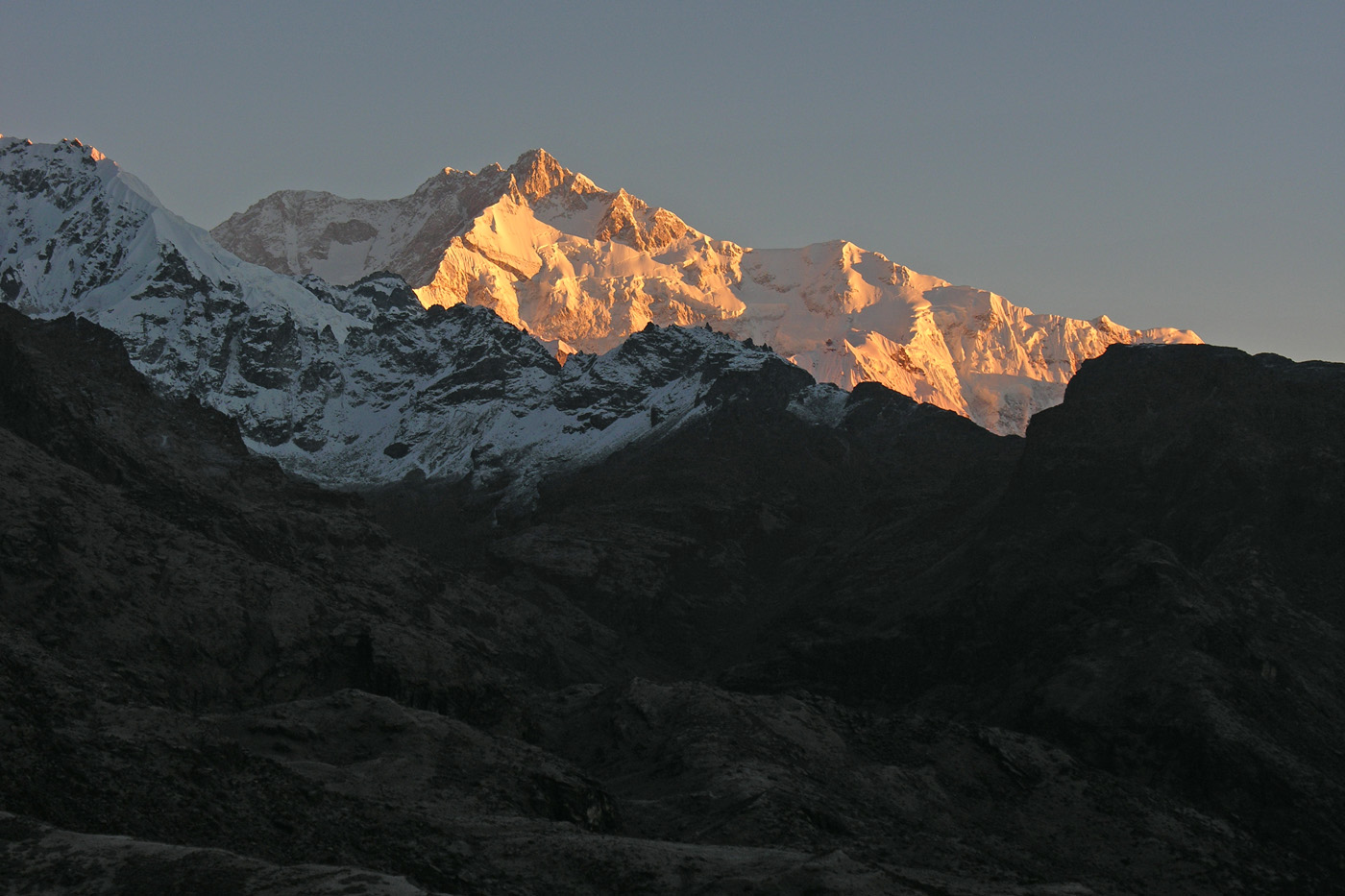
The hilly destination of Darjeeling is blessed with well defined forest trails along the Nepalese border that afford views of Kanchenjunga and glimpses of Everest, Lhotse and Makalu. Just like the geographical location the climate of Darjeeling is also pretty similar to that of Nepal.

It is said that trekking in India originated in Darjeeling. Infact, the first organised trekking route in India was established here along the Singalila range. The Sandakphu trek begins in Darjeeling and proceeds through Maneybhanjyang, Tonglu, Sandakphu and ends in Phalut. The alluring natural beauty is replete with countless varieties of rhododendrons, magnolias, orchids and wild flowers. The dense forests, the verdant meadows, the savage mass of Mt. Everest, the everlasting beauty of Kanchenjunga, the rugged Lhotse or the mysterious Makalu - all in one sweeping glance, present an experience that can never be equaled.

Darjeeling has perhaps one of the most spectacular treks to offer, along the beauty of its magnificent hills. The 'Singalila Trek' as popularly known, enables one to discover the passion of the Himalayan region some of which is unmarred by humans.

Season for Trekking In Darjeeling:

There are basically two trekking seasons for trekking in Darjeeling. The first one begins early or mid of March and closes around first week of June. One has to be always prepared for occasional showers, which is very refreshing. The flowers in bloom compensate the summer haze. The post-monsoon season brings clear days in the months of October and November with warm temperatures, especially in the valley region. The daytime temperatures in the Darjeeling drop to 0°C in December and January, although trekking from lodge to lodge still makes the trek interesting and enjoyable. Still the best time to trek in Darjeeling is the spring season when days are longer and flowers are in full bloom. Among the major and relatively easy trails of Darjeeling are Sandakphu and Phalut, providing magnificent views of the Himalayan ranges.

ITENARARY

DAY 1- (11km), Darjeeling to Maneybhanjyang to Tonglu:

Early morning one has to drive from Darjeeling to Manebhanjyang (one and half hours by bus) or by shared jeeps (45 minutes). From Manebhangyang one starts to trek to Tonglu (3070m) which provides a breathtaking view of the mountains, Mt.Kanchenjunga and its neighbouring peaks. We also get a lonely view of Darjeeling, Kurseong dotting in the green hills.

DAY 2 - (20km),Tonglu to Sandakphu:

This trek leads through the forest. There are two ways to reach Gairibass the first one is the jeep able road a bit longer and the second one is the more commonly used one i.e. through Jobber, a small village inside Nepal (no visa required). One can stop in Gairibass for a while, as the steep climb begins towards Kalpokhri. Kalpokhri as the name suggests is a dark lake. Here one can have lunch. We have another steep climb of two and a half km and a walk downhill for one and a half km to Bikheybhangyang (10,200ft), meaning a place with poison plant. From here the trek to Sandakphu is the most challenging in terms of steepness. It really tests your physical cum mental strength. The climb is through Rhododendrar and Magnolia forest. As one reaches the highest part of the trek, Sandakphu (3535m or 12,000ft) one encounters the nature's pristine glory at its magnificent best. From here one can view four of the world's highest mountain Everest, Mahakalu, Lhotse and Kanchenjunga.

IMPORTANT NOTE:
One has to carry pack lunch from Sandakphu as there are no places to eat in-between. While trekking one may come across many pathways, one should avoid taking the one which leads to the left as we may be inside Nepal and be wasting precious time.

DAY 3 - (21km) Sandakphu to Phalut:

The walk is relatively easier trek-wise and the distance to be covered is 21km. In terms of scenic beauty it is the most fascinating with view of the snow-clad mountains and Rhododendrar of different trees, Magnolias, chestnuts, oaks and silver oaks. The final stretch is almost barren, that's why Phalut gets its name, the denuded peak. Phalut is the trijunction of Nepal, Sikkim and West-Bengal.

DAY 4: (14km) Phalut to Ramam:

This trek is through rugged terrain to Gorkhey and Samarden better known as the lost village as it is a fertile village which stands at a plateau in the middle of dense forest. Another 2 km from Samarden brings one to Rammam.

NOTE:
The trekkers hut comes earlier than the village, though there is a small hotel in Rammam.

DAY 5 - (19km) Rammam to Rimbick:

The first 9km is through level path through forest of flowering trees. This stretch is well known for birds. One can relax and have lunch at a place called Sri Khola, by the riverside.From this point the road runs uphill at a gentle gradient through forest and fields till one reaches a small village called Rimbick. One can have a nice hot water bath and relax here.

Day 6 -Rimbick to Darjeeling:

One can catch early morning bus (6hrs) or jeep (4-1/2 hrs) drive to Darjeeling.There is a most suited trek itinerary but if one has fewer days then alteration can be made. For those who are too old or have difficulty trekking, they can do what we call a jeep trek. Jeep trek is nothing but taking people by vehicles (4-wheel drive) to Sandakphu and returning the next day.

You can know more about of Darjeeling at http://darjeelinginformation1.blogspot.com/.


Images of Darjeeling trek:


Darjeeling To Kanchenjunga Trekking | Trekking in Darjeeling | Darjeeling Trek | Kanchenjunga Trekking

Darjeeling Kanchenjunga Trek:

From Darjeeling hills where tea plantations stretch as far as the eye can see, to Sikkim, an ancient Himalayan kingdom of Tibetan culture, this trek offers breath-taking views of the Himalayan range from Cho Oyo to Kanchenjunga. At first through luxuriant rhododendrons, pines, spruces and giants magnolias forests, then through green meadows and yak pastures, the trek leads us towards east Sikkim, close to the Nepali border.

Along the Onglakhing glacier moraines and Samity sacred lake, we climb up to Gocha La pass, highlight of this magnificent itinerary, where we will savour the breath-taking scenery of the Talung glacier and the impressive east face of the third highest summit in the world, Kanchenjunga (8586m). We are surrounded by Rathong (6679m), Kabru (7338m), Talung (7349m) to the south, and Kirat Chuli (7365m) and Pyramid Peak (7123m) to the north. The way ack via a recently opened path, goes through lush green jungles overgrown with lianas and orchids.

Darjeeling Kanchenjunga Trekking Tours

Day 01:

Arrive Delhi, where you will be met and transfered to your hotel. (Hotel B&B)

Day 02):

Delhi – Bagdogra (by plane) – Darjeeling (2130m) by car.

Arrive Bagdogra Airport and drive to Darjeeling, charming 4-hour journey, through Assam tea plantations and tiny villages takes us to Darjeeling. Built on top of a ridge, Darjeeling faces the Himalaya and is a popular destination for Westerners and Bengalis alike. Overnight in Darjeeling.

Day 03): Darjeeling visit.

We could take an early trip to Tiger Hill to see the sunrise. Afterwards we visit the famous Ghoom monastery that enshrines an image of the Maitreya Buddha (the coming Buddha). Later on we can visit the Himalayan Mountaineering Institute and tea plantations. Overnight in Darjeeling.

Day 04): Darjeeling – Manay Bhanjang ( 2134m. 1h 30) by car – Tonglu (3070m)

Early morning drive from Darjeeling to Manay Bhanjang. The trail overlooks the Bengali plain south, and we have tantalising glimpses of Kanchenjunga ahead, as we zigzag through rhododendrons.

Day 05): Tonglu – Garibas (2620m) in 4h.

We take a mossy paved path, that snakesthrough a succession of forests and hamlets, giving way, from time to time, to spectacular mountain sceneries.

Day 06): Garibas – Sandakphu (3640m) in 4h 30 min.

We steadily climb to join the ridge trail towards Kalpokhari. Afterwards we start a long and steep climb onto the Singalila ridge that leads us to Sandakphu. A remarkable 360 ° view from the top.

Day 07 ): Sandakphu – Phalut (3600m) in 6h.

We walk to a prominent viewpoint for the magnificent sunrise over the Kanchenjunga, Jannu, Everest, Lhotse, Makalu and Cho Oyo. Throughout the day, there are ever-changing views: yak herds, silvery pine forests, tiny lakes ringed with grass, and the snow-capped Himalayan range in the background.

Day 08): Phalut – Raman (2560m) in 5h.

A pleasant descent through the woods takes us to Gorkhey (2500m) then we climb up towards Raman.

Day 09): Raman – Rimbik (2280m) in 4h.

We pass through numerous villages and cross the Sri Khola over a remarkable suspension bridge.

Day 10):

Rimbik – Pelling by car (9h)

Day 11): Pelling – Pemayangtse – Yuksam by car (2h).

2.5 km from Pelling, we will visit the Pemayangtse monastery. Perched at 2800m, it is one of the oldest and most impressive gompas in Sikkim.

Day 12): Yuksam - Tsoska (3030m) in 6h.

The trail leads up the Rathong valley, through thick, semi-tropical forests. Afterwards a steep climb takes us to the tiny Tibetan village of Tsoska. The landscape has now changed into pine, rhododendron and magnolia forests. We get excellent views of the entire Himalayan range and Kanchenjunga.

Day 13): Tsoska – Dzongri (4020m) in 5h.

A steep trail zigzags up through temperate forest and large clusters of rhododendrons, to the vast clearing of Phedang. During April and May, the spectacle is gorgeous, as the land becomes a mass of flowers (400 species have been listed so far). After 300m, we follow the ridge to Dzongri, a pasture area for Yuksam yaks from April to October.

Day 14): Dzongri – Thangshing (3930m) in 4h.

We descend through rhododendron forest towards the the glacial Prek river. We establish our campsite on the grassy pastures of Thangshing. The southern ridge of Kanchenjunga and the Onglakhing glacier are visible directly ahead and there are close-up views of Pandim.

Day 15): Thangshing – Samity Lake (4200m) in 3h.

A pleasant walk below the west side of Pandim, through dwarf azaleas and rhododendrons to Zemathang. We take our first footsteps on the Onglakhing glacier, and climb up to the shores of the Samity lake, reputed to be the sacred source of the Prek river. Ringed by prayer flags, the lake reflects Forked Peak, Kabru North, Gocha Peak and other snow-capped peaks.

Day 16): Samity Lake – Gocha La (4940m) – Thansing in 7h.

We have to leave quite early this morning, as fog and clouds descend on the pass shortly after sunrise. The track to Gocha La climbs steeply through moraines. From the pass, ringed with colorful prayer flags, we can see Kanchenjunga and beyond that, the Talung glacier.

Day 17): Thangshing – Lam Pokhari (4230m) in 5h.

After a steep descent, we climb through alpine areas and pass by tiny lakes.

Day 18): Labdang– Tashiding (1740m) in 5h.

An easy walk, in an atmosphere becoming more humid and heavier as we descend.

Day 19): Tashiding – Martam by car (4h).

We visit the Tashiding monastery, one of the most isolated in Sikkim, perched on the top of a hill set between two rivers.

Day 20): Martam – Gangtok by car (1h).

En route we visit Rumtek monastery, reputed for its religious Tibetan art. Visitors are welcome to attend prayers. Afternoon at leisure in Gangtok.

Day 21):

Gangtok – Bagdogra (by car) – Delhi (by plane). (Hotel B&B)

Day 22):

At leisure in Delhi. Safety day for your international flight. (Hotel B&B)

Day 23):

Transfer to airport and fly back home.

You can know more about of Darjeeling at http://darjeelinginformation1.blogspot.com/

Images of Darjeeling To Kanchenjunga Trekking:


Darjeeling To Kanchenjunga Trekking, Trekking in Darjeeling, Darjeeling Trek, Kanchenjunga Trekking and more